
OBSOLETE COMPONENT SOURCING GUIDE
How do you buy obsolete electronic components without taking on counterfeit risk?
A working guide for supply chain managers, buyers, and quality leaders at OEMs and contract manufacturers who keep long-life products running in aerospace, defense, medical, industrial, and energy programs.

The short answer
When a part goes obsolete, you have five options: buy ahead, qualify an alternate, use an aftermarket manufacturer, redesign, or buy from the independent market. The independent market is often the only option that can deliver in weeks instead of months. It is also where counterfeit risk is highest, because scarce, high-value parts with no factory behind them are exactly what counterfeiters target.
You can buy obsolete parts safely if you treat every lot as unproven until it is tested. That means buying from an independent distributor certified to AS6081, insisting on traceability and documentation (when available), and requiring inspection and testing to AS6171/AS6081 standards scaled to the risk of the part. It also means checking that a genuine part has survived its years in storage, because an authentic part with oxidized leads can still fail on your line. The best protection of all is planning before the end-of-life notice arrives, so you are never buying in a crisis.
Why do electronic components go obsolete?
Components go obsolete because the economics that justified building them stop working. A manufacturer runs a part as long as enough customers buy enough of it to cover the line it runs on. When that stops being true, the part is discontinued, whether or not your product still needs it.
The common causes are well known to anyone who has spent time in procurement:
- Demand moves on. A part designed for one generation of products loses volume when the next generation arrives, even if long-life programs still depend on it.
- Factories change what they build. Foundries are moving capacity away from older, mature processes toward advanced nodes and packaging. Counterpoint Research expects TSMC to reduce 12-inch mature-node capacity at its Fab 14 by 15 to 20 percent by 2028, and TrendForce expects mature-node price increases to continue into 2027.
- Companies merge. When manufacturers combine, overlapping product lines are trimmed, and parts with a small customer base are often the first to go.
- Materials and regulations change. Restrictions on substances such as lead push manufacturers to change finishes and packages, which retires older versions of a part.
- Packages and processes retire. A part can disappear because the package it ships in, or the process it was built on, is no longer supported.
Is AI making parts go obsolete faster?
Yes, and it is changing which parts get eliminated first. Chipmakers are moving factory capacity toward the memory and processors that AI data centers buy. To make room, they are retiring older lines, sometimes while customers are still buying those parts in volume.
Memory shows the pattern most clearly. In June 2025, Micron sent end-of-life notices for DDR4 and LPDDR4 to customers in PCs and data centers. It kept limited supply for long-term customers in automotive, industrial, and networking. In December 2025, Micron announced it would exit its Crucial consumer business, citing AI-driven demand in the data center. Samsung later slowed its own DDR4 phase-out, but reports say that supply went to server customers under long-term contracts that cannot be canceled or returned.
The supply chain data company Z2Data reports that more than 600,000 components were discontinued or declared obsolete in 2025, about a third more than in 2023.
For buyers, three things change:
- Strong demand no longer protects a part. A part can be discontinued while it is still selling well, so a healthy order history is not a safe sign.
- Extensions tend to go to the largest customers. When a manufacturer keeps a line running longer, the supply usually goes to its biggest accounts. Smaller OEMs and contract manufacturers may not be offered the same terms.
- Prices can rise near end of life. Buyers used to expect discounts on a fading part. DDR4 prices went up as the lines wound down.
Watch for the early signals: lead times that jump suddenly, parts placed on allocation, and parts built on the older processes that foundries are cutting back. These often show up before the formal notice. The planning steps later in this guide matter more now than they did a few years ago.
What happens when a part is discontinued?
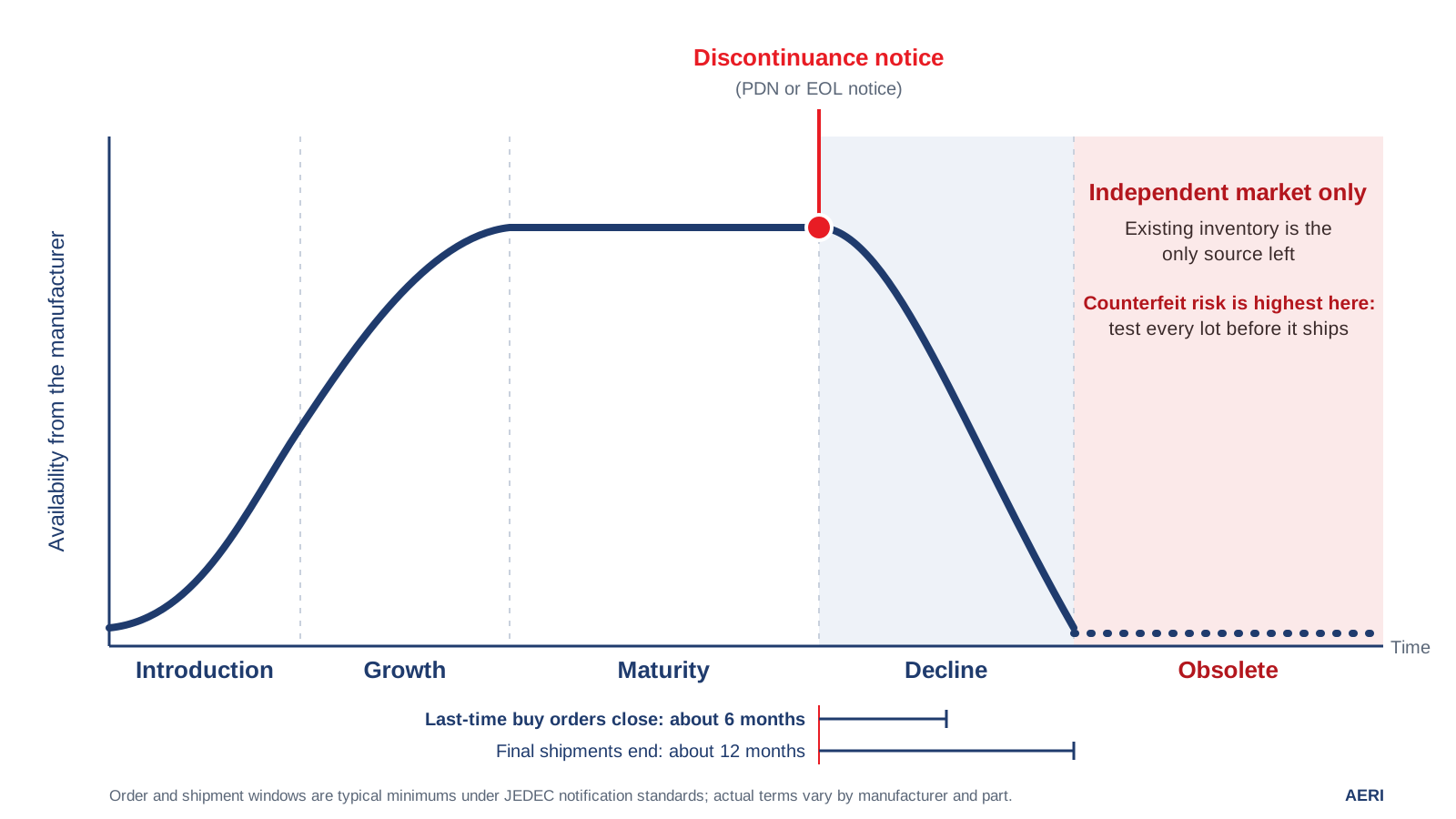
The manufacturer issues a product discontinuance notice, often called a PDN or EOL notice. Many follow the industry notification standard J-STD-048, published by JEDEC, IPC, and ECIA. A common pattern is about six months from the notice to place last-time-buy orders and about twelve months for final shipments, though the terms vary by manufacturer and by part.
That window is shorter than it sounds. Your engineering team has to decide whether to buy ahead, qualify an alternate, or redesign. Finance has to approve a large purchase of inventory nobody wants to hold. If the notice never reached the right person, the window can close before anyone acts. That is usually when a buyer starts searching the independent market.
What is DMSMS, and why does defense feel it first?
DMSMS stands for Diminishing Manufacturing Sources and Material Shortages. It is the Department of Defense term for losing the parts, materials, or suppliers needed to build and support a system. In everyday procurement language, it means "the parts we need are going out of production."
Defense feels it first because of a simple mismatch. Weapon systems and aircraft are designed to serve for decades. The electronic parts inside them are built for commercial markets that move on in a few years.
The defense share of that market has also shrunk. The Institute for Defense Analyses reports that DoD accounted for roughly half of the global semiconductor market in 1960, and about 10 percent by 1979. By 2015, a DoD official testified to Congress that the department's share was under 1 percent. A customer that small cannot ask a chipmaker to keep a line running.
The result shows up early in a program's life. The Army's Aviation and Missile Research, Development and Engineering Center estimated that 70 percent of the electronics DoD buys are obsolete before the system is even fielded, a figure cited in the 2018 federal review of the defense industrial base.
The department has responded with policy. DoD Instruction 4245.15, signed in November 2020, requires programs to manage DMSMS risk proactively across a system's life and to build those requirements into contracts. The Defense Standardization Program Office publishes a DMSMS guidebook, SD-22, and GIDEP, the Government-Industry Data Exchange Program, serves as a shared channel for discontinuance notices and problem reports.
It is not only a defense problem
Any product built to last longer than its parts faces the same problem. Medical imaging systems, industrial controls, rail signaling, power generation, and test equipment often stay in service for decades. Their buyers live with DMSMS even if they never use the acronym.
AERI holds millions of dollars of older Xilinx parts in stock, parts Xilinx no longer had a long-term channel to sell. Some of that inventory includes the only qualified parts for older versions of the F-15 fighter jet, which are still in service. You can no longer buy them from Xilinx, but independent distributors like AERI help keep the F-15 fleet flying, along with many other military and aerospace programs.
What are your options when a part reaches end of life?
You have five options, and most programs end up using more than one. The right mix depends on how much time you have, how many parts you need over the remaining life of the product, and how much risk your application can carry.
| Option | How fast | Upfront cost | Main risk | Best when |
|---|---|---|---|---|
| Last-time buy | Only inside the notice window | High: you buy years of stock at once | Guessing demand wrong; storage | You know the remaining demand and can fund and store it |
| Approved alternate | Weeks to months | Engineering time to qualify | The alternate is not a true drop-in | A pin-compatible or functional equivalent exists |
| Aftermarket manufacturer | Varies by part | Often a premium per part | Limited part coverage | The original maker has licensed continued production |
| Redesign | Months to years | Highest | Schedule and requalification | The product has a long life ahead and many parts are aging |
| Independent market | Days to weeks | Market price for scarce stock | Counterfeit and aged parts | The window has closed, or you need parts now while a long-term fix is underway |
Last-time buy
A last-time buy is a final purchase from the manufacturer before the order window closes. It is the cleanest option, because the parts come straight from the source. The hard part is the forecast. Buy too few and you are back in the market later. Buy too many and you are holding inventory, and paying to store it properly, for years.
Approved alternate
Sometimes another manufacturer makes a part that fits the same footprint and meets the same specifications. Sometimes the original manufacturer names a recommended replacement in its notice. Either way, an alternate has to be qualified by your engineering team, and sometimes by government agencies, before it goes into production, and "equivalent" on a datasheet is not the same as equivalent in your application.
Aftermarket manufacturer
Some manufacturers license other companies to keep producing discontinued parts, or transfer remaining wafer and die inventory to them. When such a source exists for your part, it is worth checking. Coverage is limited to the parts they have agreements for. This option will also likely require requalification by your engineering team, and possibly by government agencies.
Redesign
Redesigning the board around current parts solves the problem for good. It is also the slowest and most expensive path, because the new design usually has to be requalified. Many programs redesign on a planned schedule rather than in response to every single notice.
The independent market
Independent distributors buy and sell existing inventory: stock held by manufacturers, contract manufacturers, and other distributors after the factory has stopped. For an obsolete part, this is often the only place stock still exists. It is also the most common bridge: buy enough to keep the line running while the alternate is qualified or the redesign is finished.
The independent market is where the next two sections matter most.
Why do counterfeits concentrate in obsolete parts?
Counterfeiters go where the money is and where checking is hardest, and obsolete parts offer both. Research firm IHS found that 57 percent of counterfeit part reports from 2001 through 2012 involved obsolete or end-of-life components.
Four things make obsolete parts an easy target:
- Scarcity raises the price. A part that cost a few dollars when it was active can sell for many times that once the factory stops. Higher prices make faking it worth the effort.
- There is no factory to check against. With an active part, a buyer can compare against fresh stock or ask the manufacturer. With an obsolete part, the manufacturer may no longer support it, and some brands no longer exist.
- Old date codes look normal. An eight-year-old date code is suspicious on an active part. On an obsolete part it is expected, which gives a remarked or refurbished part room to hide.
- Buyers are under pressure. Obsolete parts are usually bought in a hurry, with a line-down on the other end of the phone. Under that pressure, the steps that keep bad parts out are often skipped.
The scale is not theoretical. A Senate Armed Services Committee investigation identified about 1,800 cases of suspect counterfeit parts in the defense supply chain, covering more than one million individual parts. Those parts had been supplied by more than 650 companies. A Department of Commerce study found that 39 percent of the companies and organizations it surveyed had run into counterfeit electronics, and the most common type reported by microcircuit makers was used product remarked to look like new, higher-grade product.
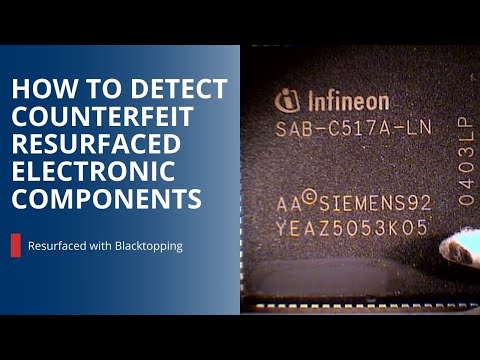
The methods our lab looks for include parts pulled from scrapped boards and sold as new, parts sanded and "blacktopped" with a fresh coating and new markings, and lower-grade parts relabeled as military or industrial grade. Our guide on how to spot a counterfeit electronic component walks through what each one looks like.
Watch our lab check a part for resurfacing, one of the most common ways obsolete parts are faked:
What makes an old part risky even when it is genuine?
An authentic part can still fail if it has spent years in the wrong conditions. Counterfeit screening answers "is this the real part?" For obsolete parts, you also need to answer "will this part still solder and work on my line?"
Three aging problems come up most:
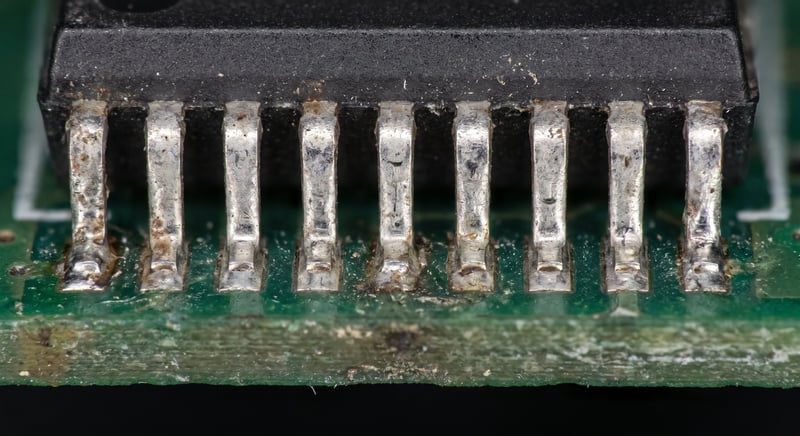
- Solderability. Over time, the finish on a part's leads or balls can oxidize. An oxidized lead may not wet properly during soldering, which leads to weak or open joints that pass a quick visual check and fail later. Solderability testing to J-STD-002 methods shows whether the leads will still take solder for proper adherence to the board. AERI can perform solderability testing in-house, so parts can still ship the same day.
- Moisture. Many plastic packages absorb moisture from the air. If a moisture-sensitive part goes through reflow without being properly dried, trapped moisture can crack the package or separate internal layers. J-STD-033 sets out how these parts should be stored, dried, and handled. Ask whether the parts have been kept sealed with desiccant and a humidity indicator card, or need to be baked first. AERI can bake your components for you in-house.
- Handling and packaging. Parts that have been repackaged, loosened from reels, or stored without static protection carry more risk. Original factory packaging is a good sign, though not proof on its own.
What about date code limits?
Many OEMs write a date code limit into their purchase terms, often asking for parts made within the last two or three years. That rule makes sense for active parts. For an obsolete part, it can be impossible to meet, because the newest parts in existence may be ten years old.
The practical answer is not to drop the requirement silently. It is to replace it with evidence. If your quality team will approve older date codes, ask for the inspection and solderability results that show the parts are sound, and keep them with the lot records. That turns a waiver into a documented, defensible decision.
How do you qualify an independent source for obsolete parts?
Qualify the supplier before the line-down, using evidence rather than promises. Every independent distributor will tell you its parts are good. These seven questions separate the ones that can show you.
- Are they certified to AS6081, or only "compliant"? AS6081 is the SAE standard for counterfeit avoidance by distributors. Certification means an accredited registrar audits the supplier against it every year. "Compliant" means the supplier just says they are following the proper procedures.
- What other certifications do they hold? For aerospace work, look for AS9120B, the quality standard for aviation, space, and defense distributors. ISO 9001 is a baseline, not a finish line.
- What testing do they do, and where? Ask for inspection and testing to AS6171 standards, scaled to the risk of the part and the application. Ask which tests are done in the supplier's own lab and which are sent out, and how long each takes.
- What will I receive with the parts? Expect a certificate of conformance, whatever traceability exists, and a test report with photos of each condition found. An honest supplier tells you where the paper trail has gaps instead of hiding them.
- How do they check genuine parts for age? Ask about solderability testing and how moisture-sensitive parts are stored and handled.
- What happens to a suspect part? A qualified supplier quarantines suspect counterfeits, keeps them out of circulation, and reports them. It never quietly sends them back into the market.
- Are they on the government-approved testing lists? Defense buyers should check whether the supplier is qualified under the Defense Logistics Agency's supplier programs for distributors and testing.
Our guide on how to prevent counterfeit electronic components covers supplier qualification and the standards behind it in more depth.
How do you plan ahead so you are not buying in a crisis?
The least expensive obsolete part is the one you planned for. Most of the cost and risk of obsolescence comes from discovering it late. These habits move the discovery earlier:
- Know the lifecycle status of your bill of materials. Review your BOMs on a schedule for parts that are active, not recommended for new designs, last-time buy, or obsolete.
- Make sure notices reach a person. Sign up for discontinuance notices from your manufacturers and distributors, and name an owner for each product line. A notice sitting in a shared inbox is the same as no notice.
- Rank your risk. Sole-source parts, custom parts, and parts in products with many years left deserve the most attention.
- Pre-approve alternates. Qualify alternates for high-risk parts before you need them, and add them to your approved vendor list.
- Budget for last-time buys. Set aside funds so a last-time buy does not wait on an approval cycle longer than the notice window.
- Store what you buy correctly. Parts bought ahead need controlled storage, especially moisture-sensitive packages, or you trade an availability problem for a quality problem.
- Qualify an independent source now. Do the supplier checks in the previous section while there is no deadline, so you are not judging a stranger's paperwork during a line-down.

How does AERI source obsolete parts?
This section describes what we do and what you receive, not a sales pitch. I started the company in 1994 because procurement professionals could not get the obsolete and allocated parts they needed, and that work is still at the center of what we do.
Every part comes home to California
We source obsolete, end-of-life, and hard-to-find parts from a network we have spent 32 years building. Whatever the source, the parts come to our facility in Costa Mesa, California, before they go to you. They are inspected in our in-house QC lab, not passed straight through.
What our lab does in-house
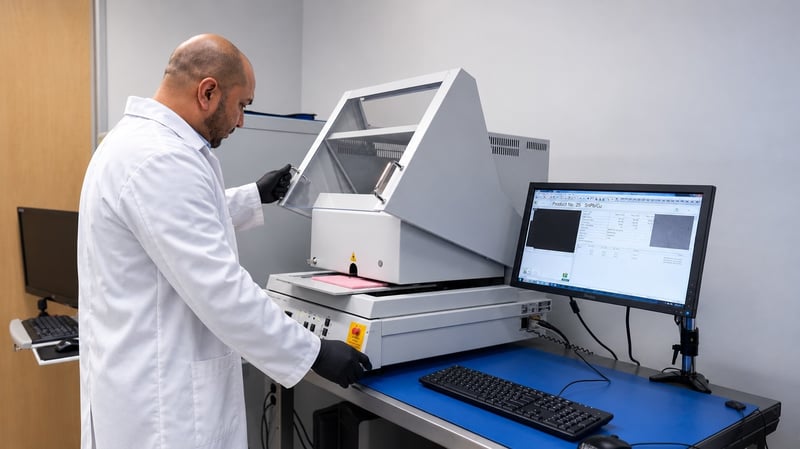
Our lab handles visual inspection, X-ray inspection, decapsulation, XRF material analysis, microscope inspection, and solderability testing. That covers both questions an obsolete part raises: is it authentic, and has it survived its years in storage? When electrical testing is required, we use qualified outside test labs and include their results in your report.
The standards behind the work
AERI is certified to AS6081, AS9120B, ISO 9001:2015, and ESD S20.20. We are qualified under the Defense Logistics Agency's QSLD and QTSL programs. We test to AS6171 standards, scaled to the risk of the part. I was a founding member of the committee that wrote AS6081, alongside a diverse group of industry subject matter experts, so these are standards we work to every day.
What you receive
You receive the parts with their documentation and, when testing is ordered, a report that includes photos of each condition we found. If a part is suspect, we tell you, and it does not go back into the market. When you send a request, you hear back within a few hours.
Frequently asked questions
What does EOL mean for an electronic component?
EOL means end of life: the manufacturer has announced it will stop making the part. It usually comes with a product discontinuance notice that sets a last date to order and a last date to ship. After that, the part is obsolete and only existing inventory remains.
What is a last-time buy?
A last-time buy is a final order placed with the manufacturer before a discontinued part's order window closes. Buyers use it to stock enough parts for the remaining life of a product. A common window is about six months from the notice, but terms vary by manufacturer.
What is the difference between obsolete and allocated parts?
An obsolete part is no longer made. An allocated part is still made, but demand exceeds supply, so the manufacturer rations it among customers and lead times stretch out. Both can send buyers to the independent market, and both carry counterfeit risk when they do.
Are obsolete parts from an independent distributor safe to use?
They can be, when the distributor is certified to AS6081, the parts are inspected and tested to AS6171 standards for the risk involved, and genuine parts are checked for aging. The risk comes from skipping those steps, not from the independent market itself.
How old is too old for a date code?
There is no single answer. Many OEMs limit date codes to two or three years for active parts, but obsolete parts are often older. If your quality team approves older date codes, support the decision with inspection and solderability results kept with the lot records.
What documentation should come with obsolete parts?
At minimum, a certificate of conformance and whatever traceability exists for the lot. When testing is ordered, you should also receive a test report with photos of each condition found. A good supplier tells you where the documentation has gaps.
What is DMSMS?
DMSMS stands for Diminishing Manufacturing Sources and Material Shortages. It is the Department of Defense term for losing the parts, materials, or suppliers a system needs. DoD Instruction 4245.15 requires defense programs to manage that risk proactively.
Can AERI find a part that is out of stock everywhere?
Often, yes. Send us the part number and quantity, and we will search for it and tell you within a few hours what we found. If we cannot find parts we would stand behind, we will say so.
Where do you go from here?
If you have an obsolete part you need now, send us the part number and quantity and you will hear back within a few hours. You can also search our inventory or see how we source obsolete and hard-to-find parts. If you are planning ahead, start with your highest-risk parts and the supplier questions above.
For more on keeping counterfeits out of your supply chain:
About the author
Robb Hammond, founder of AERI. Founding member and former committee chair of the SAE AS6081 Standard created for the avoidance of counterfeit electronic components. He founded AERI in Costa Mesa, California, in 1994.
Sources
- Counterpoint Research, TSMC Fab 14 mature-node capacity reduction, January 2026 (via Design & Reuse)
- TrendForce, mature-node price increases expected into 2027, June 30, 2026 (TrendForce)
- Discontinuance timing: JEDEC JESD48 sets minimums of 6 months to place final orders and 12 months for final shipments; J-STD-048 (JEDEC, IPC, ECIA) replaced it in 2014. Example manufacturer terms: MaxLinear product discontinuance policy
- Institute for Defense Analyses, The Evolution of DMSMS Management in DOD, P-8689 (IDA)
- DoD market share under 1 percent: testimony of the Acting Deputy Assistant Secretary of Defense for Manufacturing and Industrial Base Policy, October 28, 2015 (House testimony)
- 70 percent of DoD electronics obsolete before fielding (Inside Defense, November 18, 2020; George Mason University Center for Government Contracting)
- DoD Instruction 4245.15, DMSMS Management, November 5, 2020
- DMSMS Guidebook SD-22, Defense Standardization Program Office (DTIC)
- GIDEP, Government-Industry Data Exchange Program
- IHS, Counterfeiting and Semiconductor Value Chain Economics, 2013: 57 percent of counterfeit reports involved obsolete or EOL parts (paper)
- Senate Armed Services Committee, Inquiry into Counterfeit Electronic Parts in the DoD Supply Chain, May 2012 (SASC release)
- U.S. Department of Commerce, Bureau of Industry and Security, Defense Industrial Base Assessment: Counterfeit Electronics, January 2010 (BIS report)
- TrendForce, Micron confirms DDR4 and LPDDR4 EOL notices, June 13, 2025 (TrendForce)
- Micron exits Crucial consumer business, December 3, 2025 (ServeTheHome)
- Samsung delays DDR4 end of life under long-term contract, 2025 (Tom's Hardware)
- SemiMedia, DDR4 spot prices rise as Micron phases out DDR4, June 16, 2025 (SemiMedia)
- Z2Data, How AI Is Accelerating Part Obsolescence, November 17, 2026 (Z2Data)